From Panels to Premiere: The Phenomenon of Indigo Children
In an era where comic books are increasingly recognized as the fertile ground for the next big cinematic universe, the rise of Indigo Children stands out as a compelling testament to the power of original storytelling. This captivating sci-fi mystery series from Image Comics, brought to life by the critically acclaimed team of Curt Pires, Rockwell White, Alex Diotto, and Dee Cunniffe, has not only enthralled readers with its intricate plot and philosophical depth but has also rapidly captured the attention of Hollywood, already being optioned for a feature film. From the minds that brought us the smash-hit series Youth, Indigo Children offers a unique blend of high-stakes intrigue, extraterrestrial enigma, and profound ethical questions that resonate far beyond its stunning artwork.
The journey of Indigo Children from a graphic novel page to the silver screen is a narrative in itself, highlighting the increasing appetite for nuanced, creator-driven science fiction. This article delves into the core of what makes this series a must-read, exploring its gripping premise, its thought-provoking themes, and the exciting prospects of its cinematic future.
The Enigmatic Premise: Unraveling the Mystery of the Indigo Children
Fifteen years ago, the world witnessed an inexplicable vanishing act. A group of preternaturally gifted individuals, collectively dubbed the Indigo Children, disappeared without a trace, leaving behind a void of unanswered questions. This is the intriguing starting point of Curt Pires and Rockwell White's saga, a mystery that has haunted investigative reporter Donovan Price ever since. Donovan, a man obsessed with the truth, refuses to let the story die, relentlessly pursuing any lead that might shed light on their whereabouts.
His latest breakthrough arrives in the form of a cryptic video tape. On it, one of the missing children, Alexei, delivers a revelation that shatters conventional understanding: the Indigo Children are not merely gifted humans, but the sole survivors of a devastating holocaust on Mars. Their arrival on Earth, Alexei claims, was no accident. They fled their dying planet with a singular, profound mission: to prevent a similar annihilation from befalling humanity—an implied "inferior" people. This cosmic origin story immediately elevates the stakes, transforming a simple missing persons case into an intergalactic epic.
Of course, those who hold the secrets of the Indigo Children are unwilling to share them. Donovan's quest for answers is met with resistance and danger at every turn. An anonymous tip leads him to the desolate expanses of Russia, where one of the individuals seen on the tape is rumored to be in hiding. But as Donovan closes in, an assassin's shadow looms, attempting to silence the persistent journalist and stage his death as a suicide. This chilling encounter forces Donovan to confront the gravity of his investigation, realizing he needs more than just journalistic grit; he needs "the big guns," hinting at the recovery or activation of one of these powerful, vanished beings. As their complex journey unfolds, it promises to unearth a secret capable of altering the very fabric of our world, leading to the reunion of the Indigo Children—only for them to face a new, insidious threat from within their own ranks. For a deeper dive into the first volume's intricacies, explore Indigo Children Vol 1: Image Comics' New Sci-Fi Mystery.
Beyond the Pages: Themes, Art, and Creative Vision
Indigo Children transcends the typical sci-fi narrative, delving into complex ethical dilemmas and profound philosophical questions. The series immediately draws comparisons to critically acclaimed works like MIND MGMT, both in its intricate, layered storytelling and its distinctive artistic style. The core premise forces readers to ponder what humanity's reaction would truly be if confronted by extraterrestrial beings who genuinely claim to want to help. But the series masterfully interrogates this benevolent facade, asking how truly benevolent those aliens might be, and at what cost their 'help' might come.
The creative team, led by writers Curt Pires and Rockwell White, with art by Alex Diotto, colors by Dee Cunniffe, and lettering by Hassan Otsmane-Elhaou, weaves a tapestry rich with moral ambiguity. They explore the ethics of a collapsing world and the primal instinct to preserve "what's ours"—a concept that becomes increasingly blurred when advanced alien intervention is at play. The narrative brilliantly navigates the murky waters between altruism and self-interest, leaving readers to grapple with the realization that, much like in real life, the distinction between "good guys" and "bad guys" is far more complex than it appears. This examination of motivations and potential threats from these gifted beings is central to the narrative, prompting questions like, The Indigo Children: Alien Saviors or Threat to Humanity?
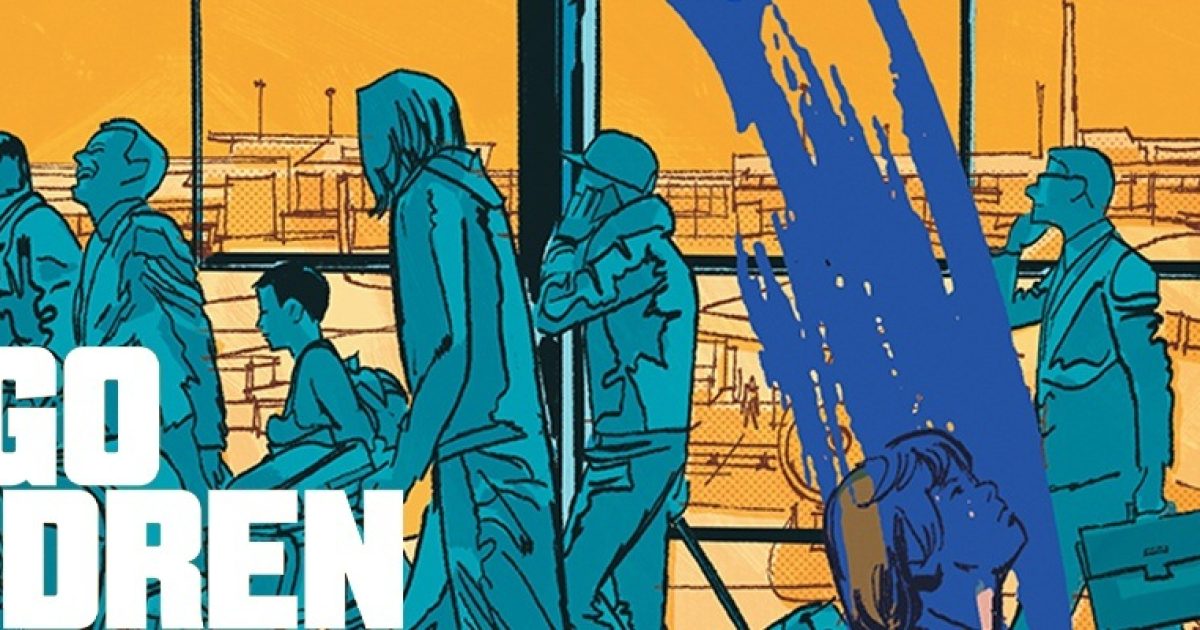
Visually, the comic is a treat, though not without its quirks. Dee Cunniffe's color work is consistently strong, setting a powerful mood that enhances the narrative's tension and mystery. Alex Diotto's lines, while occasionally described as rudimentary or sketchy, particularly as new characters are introduced, contribute to a distinct, raw aesthetic. This stylistic choice, whether intentional or not, sometimes makes it challenging to differentiate between new "pale guys" in a crowded scene, as one reviewer noted. However, this very sketchiness can also be seen as complementing the story's pervasive sense of conspiracy and fragmented reality, where identities are intentionally obscured for future plot twists. The decision to keep the government conspirators unnamed or unlabeled, while occasionally adding to reader confusion in the moment, promises significant payoffs in later volumes, building anticipation for revelations that could redefine the entire saga. This approach underscores Image Comics' commitment to creator-owned works that push boundaries and challenge conventional storytelling.
From Panel to Screen: The Journey to Film Adaptation
Perhaps one of the most exciting developments surrounding Indigo Children is its rapid progression from comic book sensation to feature film in development. Long before the first collected volume hit shelves (the ongoing series itself launched in March, with Vol 1 published November 21, 2023), the series was already optioned for cinematic adaptation. This swift recognition speaks volumes about the compelling nature of its premise and the cinematic potential inherent in its pages.
At the helm of this adaptation is Jeff Ludwig, a producer known for his work on critically acclaimed projects like Alan Wake. Ludwig's involvement brings a significant level of credibility and a proven track record for translating complex, atmospheric narratives into engaging screen experiences. What makes Indigo Children so ripe for film adaptation? It's a confluence of factors:
- High Concept Premise: A group of powerful, extraterrestrial child survivors from Mars living secretly on Earth with a mission to 'save' humanity provides an immediate, gripping hook.
- Layered Mystery: The ongoing investigation by Donovan Price, the hidden identities, and the internal threats create a narrative engine perfectly suited for a serialized film or franchise.
- Action-Packed Sequences: The comic features assassins, daring escapes, and confrontations, all prime material for dynamic visual storytelling.
- Profound Themes: The exploration of ethics, benevolence, species survival, and human sovereignty offers a rich tapestry for meaningful dramatic conflict.
- Visual Potential: Despite some critiques, the comic's overall aesthetic, particularly Dee Cunniffe's strong color work, provides a vivid blueprint for a visually striking film.
The transition from comic book to film offers both opportunities and challenges. Capturing the intricate plot twists and the philosophical depth without alienating a broader audience will be key. However, with the right creative team and Ludwig's experience, the Indigo Children film has the potential to be a groundbreaking sci-fi epic that captivates audiences worldwide, introducing a new generation to this complex, morally ambiguous universe. Fans of intelligent sci-fi thrillers should keep a close eye on this project, as it promises to deliver a cinematic experience as thought-provoking as its source material.
Why You Should Read (and Watch) This Sci-Fi Saga
For readers who appreciate narratives that challenge assumptions and blur the lines between hero and villain, Indigo Children is an indispensable read. It’s more than just a sci-fi mystery; it’s an interrogation of intent, power, and the very definition of humanity. The series' strength lies in its ability to present a compelling mystery while simultaneously prompting deep ethical introspection. If you've enjoyed the psychological depth and intricate conspiracies of books like MIND MGMT, or are a fan of Image Comics' reputation for pushing the boundaries of creator-owned genre fiction, this series belongs on your must-read list.
Practical advice for delving into this world: embrace the mystery. The intentional vagueness around certain characters and organizations is a feature, not a bug, designed to build suspense and deliver impactful revelations down the line. Pay attention to the nuanced dialogue and the visual cues, as they often hint at deeper truths. The series is an ongoing journey, and each revelation builds upon the last, making it a rewarding experience for those who invest in its unfolding narrative. Beyond the storytelling, the series boasts impressive variant covers by artists like Tyler Boss, Tula Lotay, and Jenny Frisson, making it a collector's delight.
As the series continues to expand and the film adaptation progresses, Indigo Children is poised to become a significant player in the modern sci-fi landscape. It’s a story that asks big questions about who we are, who we can trust, and what it truly means to be saved. Whether you discover it through the vibrant pages of the comic or on the expansive canvas of the big screen, the saga of the Indigo Children promises an unforgettable journey into the heart of a world both familiar and profoundly alien.
Conclusion: From its initial publication by Image Comics to its upcoming cinematic debut, Indigo Children has quickly established itself as a potent force in science fiction. With its blend of thrilling mystery, deep philosophical inquiry, and stunning artistry, Curt Pires and Rockwell White's creation offers a fresh perspective on alien encounters and humanity's place in the cosmos. Its success as a comic and its promising future in film underscore the timeless appeal of stories that challenge us to look beyond the surface, questioning perceived saviors and confronting the complex truths that lie hidden beneath.